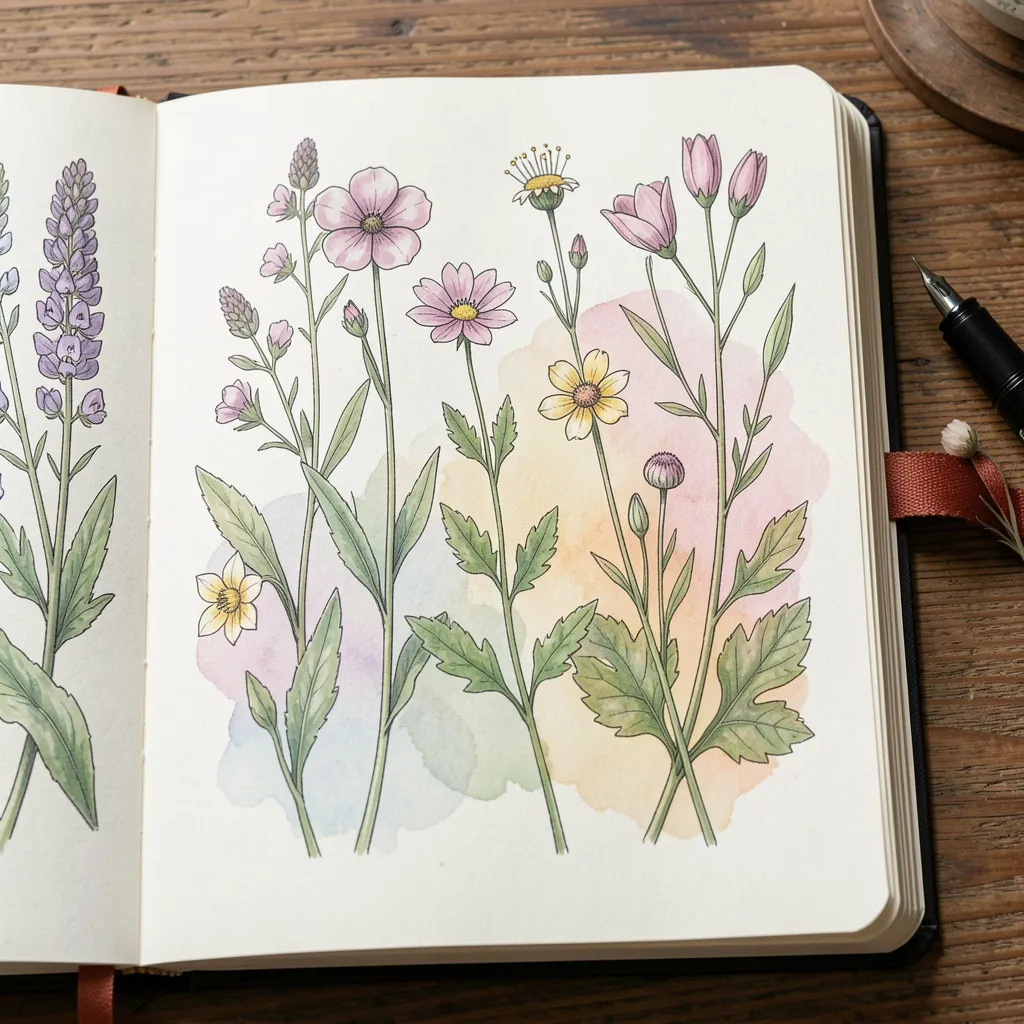
Color Stories
Each botanical subject inspires a unique color palette. These color stories explore the pigments used in watercolor illustrations, showing how specific plants influence the selection and mixing of colors to create authentic and expressive botanical art.
Featured Palettes
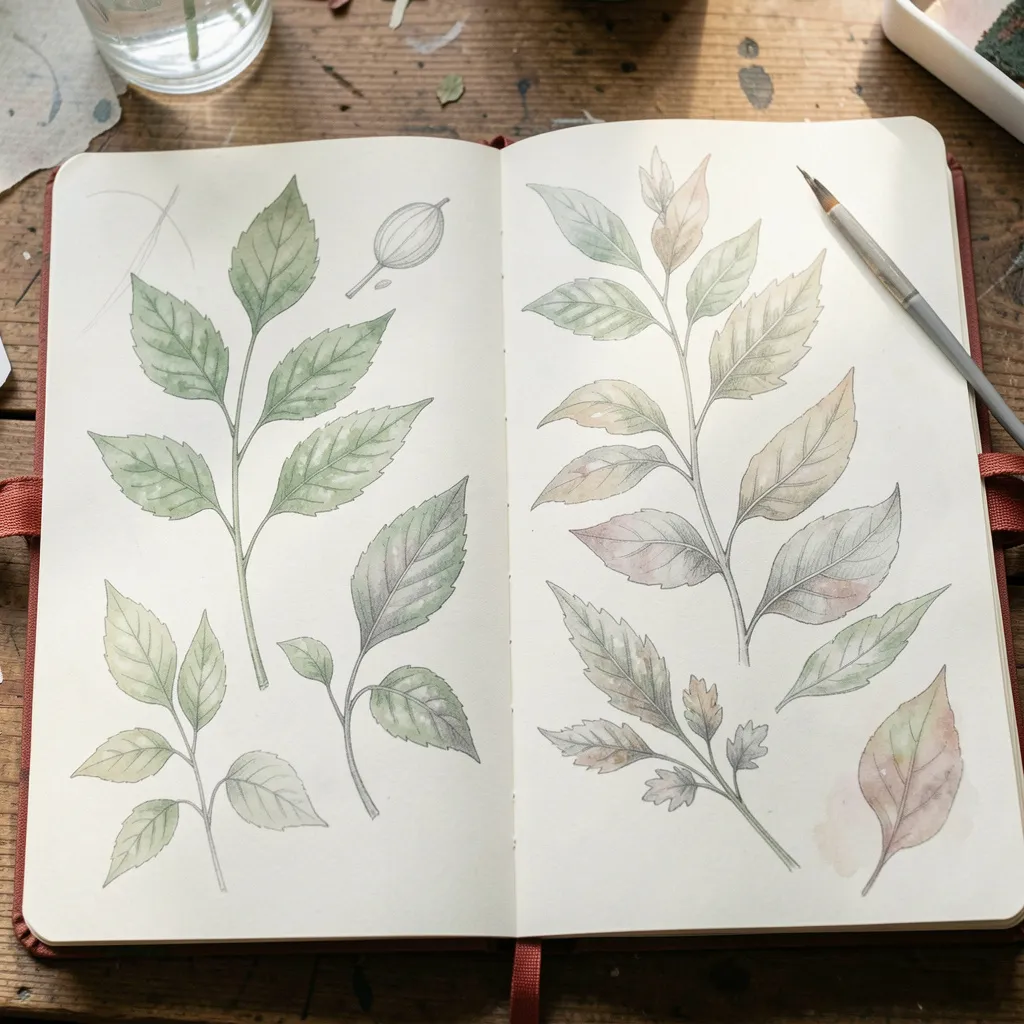
The Lavender Palette
Soft purples and muted greens capture the essence of lavender fields, combining cool tones with delicate floral hues.
Colors: #E6E6FA, #9370DB, #8FBC8F
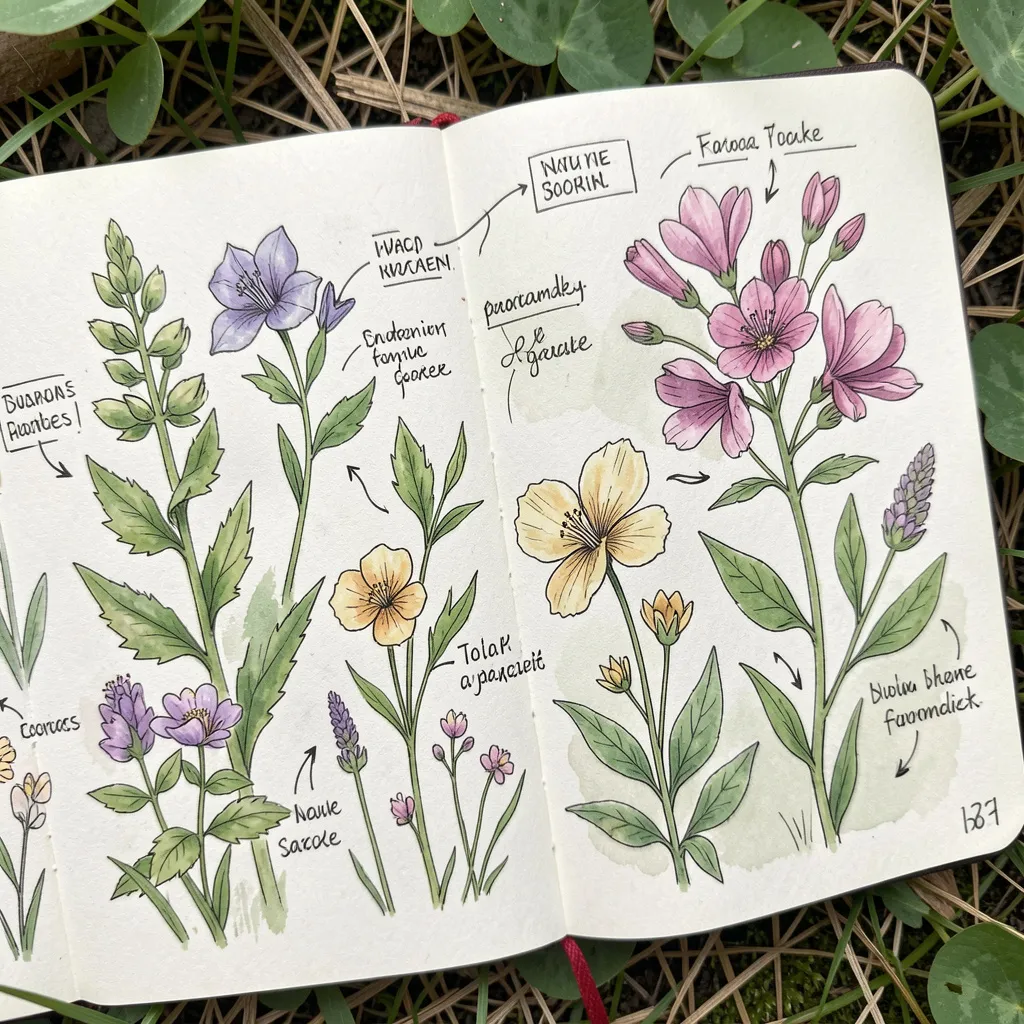
Autumn Moss
Rich earth tones and deep greens reflect the colors found in forest undergrowth during autumn months.
Colors: #8B7355, #556B2F, #6B8E23
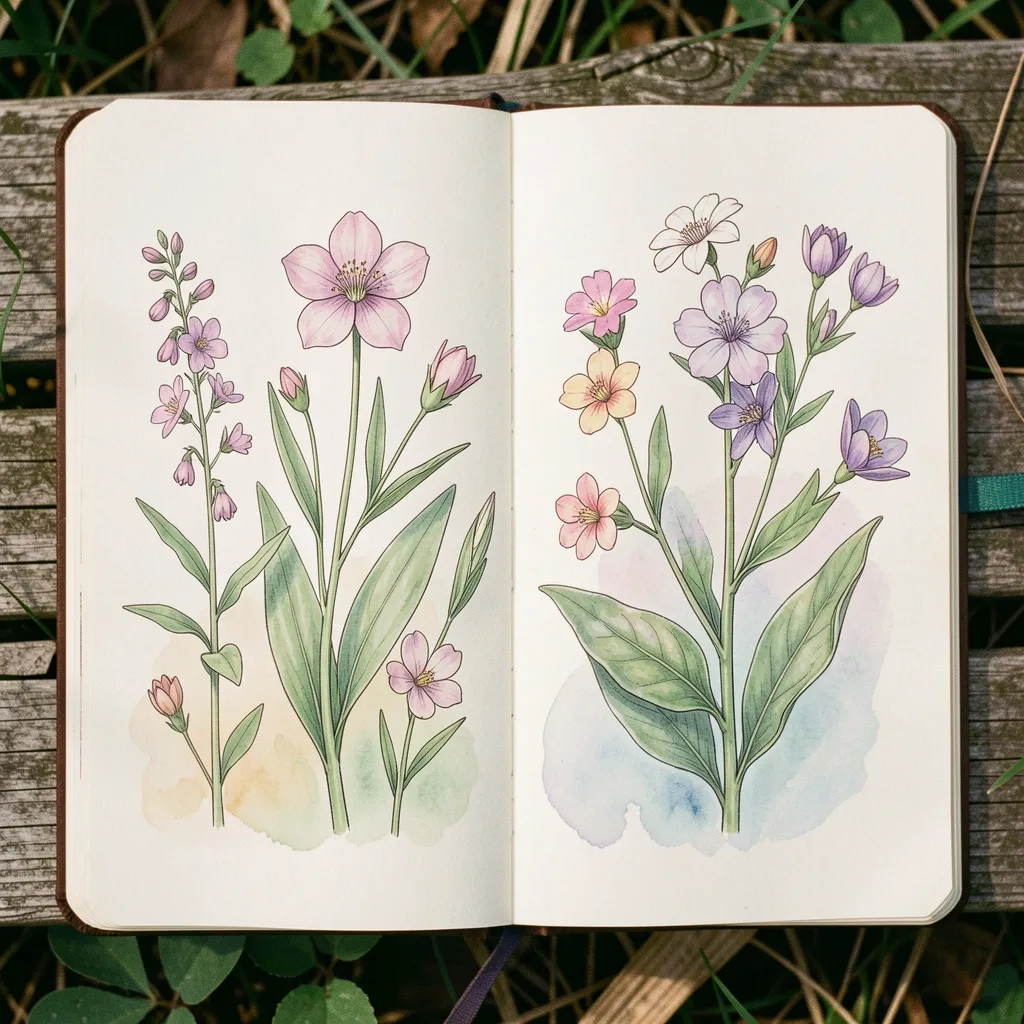
Field Study Greens
A comprehensive range of greens derived from observing plants in various stages of growth and different lighting conditions.
Colors: #90EE90, #228B22, #2F4F2F
Understanding Pigments
Watercolor Mixing
Understanding how different pigments interact allows for accurate color representation of botanical subjects through careful color mixing.
Natural Color Reference
Working directly from nature provides authentic color reference, ensuring illustrations accurately reflect the true colors of botanical subjects.
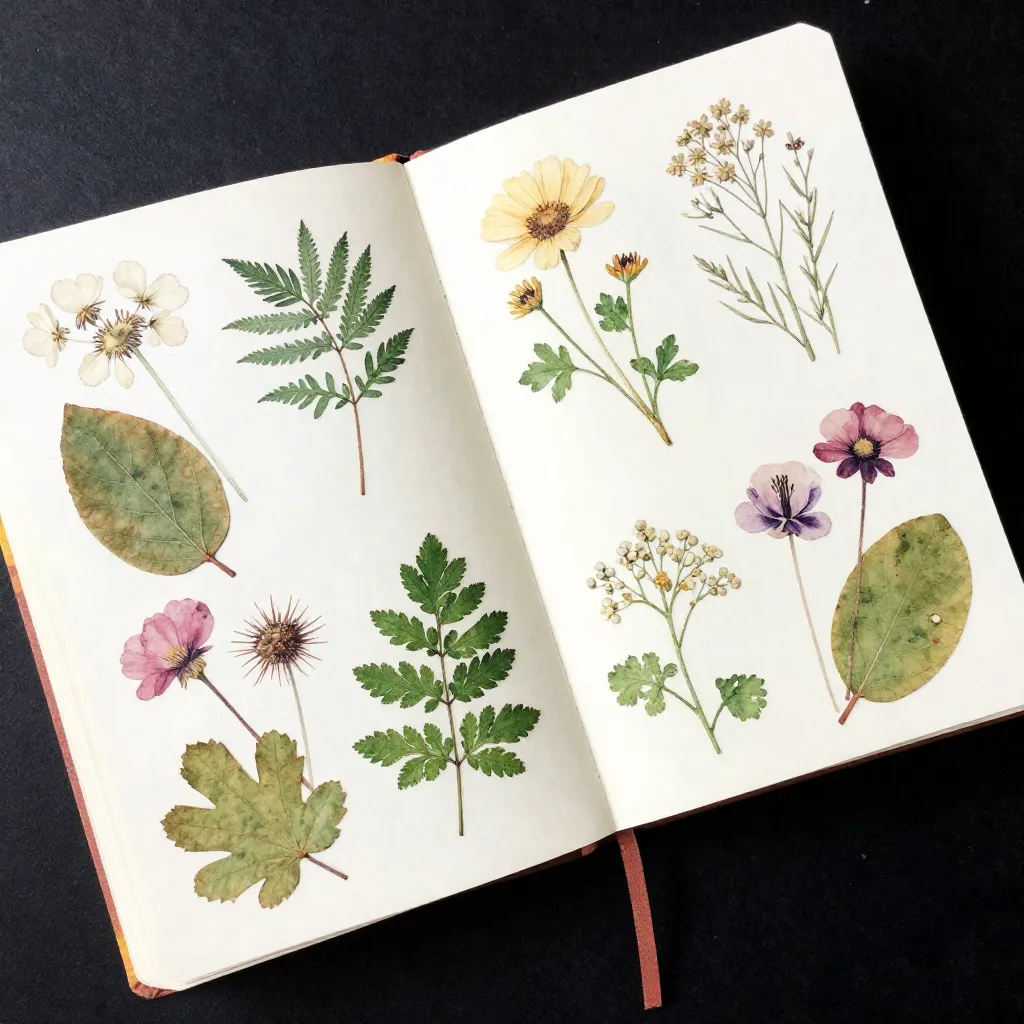
Seasonal Variations
Color palettes change with seasons, reflecting the natural variations in plant coloration throughout the year.
Continue Exploring
See how these colors come to life in botanical illustrations